
Ever wondered why your rivals are soaring to the top of Google? The answer often lies in one powerful factor: backlinks. These digital endorsements from other websites enhance a site’s credibility, boosting its search rankings.
But here’s the real edge: A smart competitor backlink analysis doesn’t just show you what they’re doing, it reveals how they’re doing it. At UppercutLinks, we decode the blueprint behind your rivals’ success by analyzing their most powerful backlinks. We then use that intelligence to build you a stronger, smarter backlink profile designed to take their spot at the top.

From the number of backlinks and linking domains to their most linked pages, this strategic insight transforms scattered data into targeted link-building opportunities. Tap into their blueprint, outrank them, and boost your site’s authority like never before.
Competitor backlink analysis is a strategic deep dive into the inbound links fueling your rivals’ SEO success. These backlinks act as digital endorsements, signaling to search engines that a site’s content is trusted, relevant, and authoritative.
But it’s not just about counting links, it’s about decoding the who, what, and why behind each one. By uncovering which domains link to your competitors, which content gets the most traction, and why these links were earned, you gain actionable insights to reverse-engineer their strategy. This empowers you to craft more effective link-building campaigns, enhance your site’s authority, and secure your position at the top of search results.

Analyzing competitors’ backlinks isn’t optional; it’s strategic armor. It exposes high-authority link sources, reveals proven content formats, and identifies gaps your brand can exploit. It’s how you move from guessing to precision. Smart SEO starts with intelligence.
Discover which high-authority sites are linking to your competitors. This instantly gives you a vetted list of outreach targets, sites already proven to engage in link partnerships within your niche, saving time and boosting your campaign’s precision.

By identifying which of your competitors’ pages attract the most links, you can understand what topics and formats resonate within your industry, allowing you to create content that is inherently “link-worthy.”
A thorough analysis reveals the gaps in your competitors’ strategies, such as high-authority sites that link to one rival but not another. This is your opening to step in and secure a link they missed.

Looking at multiple competitors helps you avoid building a narrow backlink profile. A variety of high-quality, relevant links from different domains is a strong signal of a natural, authoritative website.
Not all backlinks are blessings. Some competitors may have disavowed spammy or low-quality links, indicating areas to avoid. Advanced tools can uncover disavowed domains or spot patterns that signal toxic link sources, helping you build a cleaner, healthier profile.
Competitor backlink analysis begins with clarity. You must distinguish true SEO competitors, not just industry peers, but sites winning on your key terms. Identify those consistently ranking on Google and dive deeper with tools like Semrush or Ahrefs. This sets the foundation for strategic insight. Follow these steps to move from data collection to strategic action:
Your brand’s direct business competitors are not always your primary SEO competitors. Your real rivals are the websites that consistently rank for your most important keywords.
Perform Google searches for your top 5-10 target keywords. Note the domains that consistently appear in the top 10 results. These are your key SEO competitors. Tools like Semrush and Ahrefs also have features to automatically identify organic competitors based on keyword overlap.
To see behind the curtain, you need the right tools. While free options exist, a professional-grade SEO suite is essential for deep analysis.
Now, it’s time to dig into the data. Enter a competitor’s domain into your chosen tool (e.g., Semrush’s Backlink Analytics or Ahrefs’ Site Explorer) and focus on extracting actionable insights.

Beyond surface-level metrics like domain authority, professional SEOs dig into link velocity (how fast links are being gained), link freshness (how recent they are), and dofollow/nofollow ratios. These indicators provide nuance, revealing not just where competitors get links, but how stable and active their campaigns are over time.
This is where the most actionable opportunities are found. A link gap analysis identifies websites that link to multiple of your competitors but not to you.
Use a “Link Intersect” or “Backlink Gap” tool. Enter your domain and up to five competitor domains. The tool will generate a list of high-potential targets that are already linking to other players in your industry, making them highly receptive to your outreach.

You’ve now walked through the structured steps of competitor backlink analysis. To reinforce your workflow, or share this with a team, here’s a summary table that condenses the entire process into a skimmable roadmap:
| Step | Action | Recommended Tools | Outcome |
|---|---|---|---|
| Identify SEO Competitors | Search top keywords and spot domains that rank consistently | Google Search, Semrush (Organic Research) | Pinpoint true SEO rivals |
| Choose Analysis Toolkit | Select a platform for backlink data and filtering | Ahrefs, Semrush, Moz | Access full backlink profiles |
| Analyze Top-Linked Pages | Find competitor content that earns the most backlinks | Ahrefs (Best by Links), Semrush | Spot proven content formats and topics |
| Examine Referring Domains | Evaluate domain authority and niche relevance | Ahrefs, Moz Domain Analysis | Qualify high-potential outreach targets |
| Assess Link Context & Anchor Text | Study link types, placement, and keywords used | Ahrefs (Anchor Text, Link Types) | Reverse-engineer competitors’ link acquisition model |
| Run Link Gap Analysis | Discover domains linking to rivals but not to you | Semrush (Backlink Gap), Ahrefs (Link Intersect) | Prioritize outreach based on existing relationships |
| Optional: Track Advanced Metrics | Monitor link velocity, freshness, and follow/nofollow ratio | Ahrefs, Screaming Frog | Understand momentum and link sustainability |
Data is useless without action. Here are four professional strategies to turn your analysis into tangible results.
The fastest way to level up your backlink profile is to pinpoint and pursue the exact links that are already working for your competitors. These aren’t just any backlinks; they’re endorsements from high-authority domains that have proven their trust.

If a respected industry site links to multiple rivals on a “Top Tools for [Your Niche]” page, that’s not just a trend, it’s an open invitation. Your outreach isn’t cold; it’s backed by precedent and relevance.
Use tools like Ahrefs, Semrush, or Moz to uncover these link placements. Then craft personalized outreach that emphasizes your unique value, adding depth or differentiation that justifies your inclusion.
Broken link building is a savvy win-win: you help webmasters fix outdated links while earning valuable backlinks for yourself. Over time, pages get deleted or moved, leaving behind broken links that weaken user experience and SEO.

Agencies and enterprise SEO teams can plug backlink data into platforms like NinjaCat, Google Data Studio, or use Ahrefs’ and Semrush’s APIs for live dashboards. Automating reports ensures you stay proactive, spotting link changes, tracking competitors, and reporting progress with efficiency.
Replicating high-authority backlinks already earned by your competitors is the fastest way to close the gap. If trusted domains are linking to them, you have proof of relevance, and your outreach carries weight from the start.
Broken link building lets you turn your rivals’ forgotten pages into your SEO wins. Find their 404s, craft a better replacement, and offer it up as a fix. You’re not begging, you’re solving.
And when it comes to the Skyscraper Technique, good isn’t enough. Find their most-linked content and build something that surpasses it, in-depth, design, or insight. Then show the linking sites why your version deserves the spotlight.
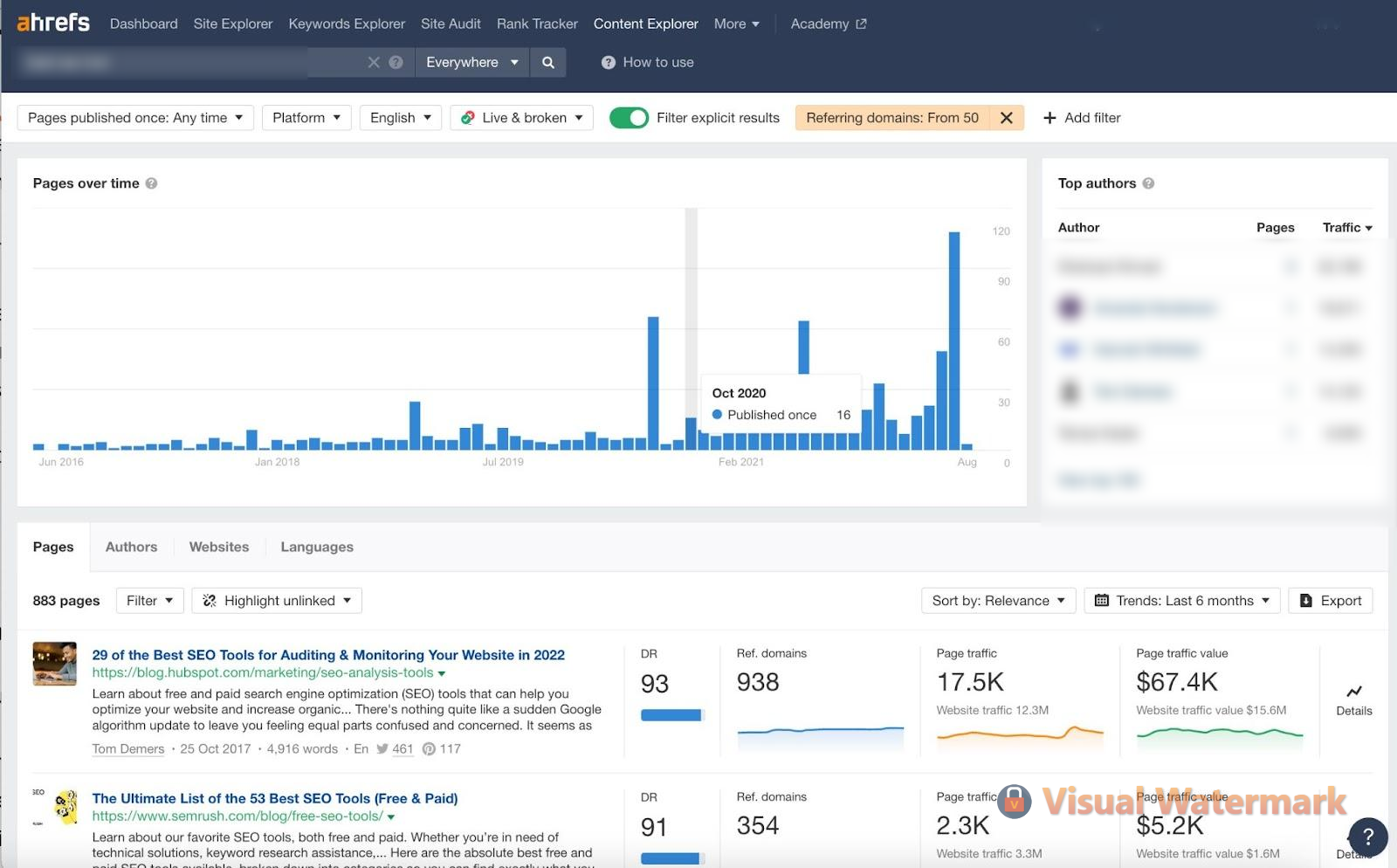
Analyze the journalists, bloggers, and publications that consistently feature your competitors. This reveals the key media players in your niche. Instead of a cold pitch, you can build a genuine relationship over time by engaging with their work and offering unique insights. When you do have a story or piece of content to share, they will already know who you are.
By moving beyond simple observation to strategic analysis and execution, you transform competitor research from a passive activity into your most powerful SEO weapon. This disciplined approach will not only help you close the gap but will position you to become the authority others need to chase.
Competitor backlink analysis isn’t just a technical exercise; it’s a window into your rivals’ strategic playbook. By studying their link sources, content magnets, and domain partnerships, you uncover the pathways they’ve used to gain visibility and trust online.
But knowing the path is only the first step. Executing a smart, sustained backlink campaign takes time, precision, and creative outreach. That’s where most brands struggle, and where opportunities get lost.
At Uppercutlinks, we close that gap. We don’t just analyze; we act. From authority content to high-impact link acquisition, we build campaigns that outpace competitors and elevate your digital presence. Ready to turn insights into results? Let’s not just catch up, let’s leave them behind.